ServicesCustom Glass Railings
Custom Glass Railings in Huntington Beach
We build glass railings for decks, balconies and stairways that open up the view without giving up safety. Each panel is measured to fit, set in corrosion-resistant hardware and anchored into solid framing, with every fastener penetration sealed against water.
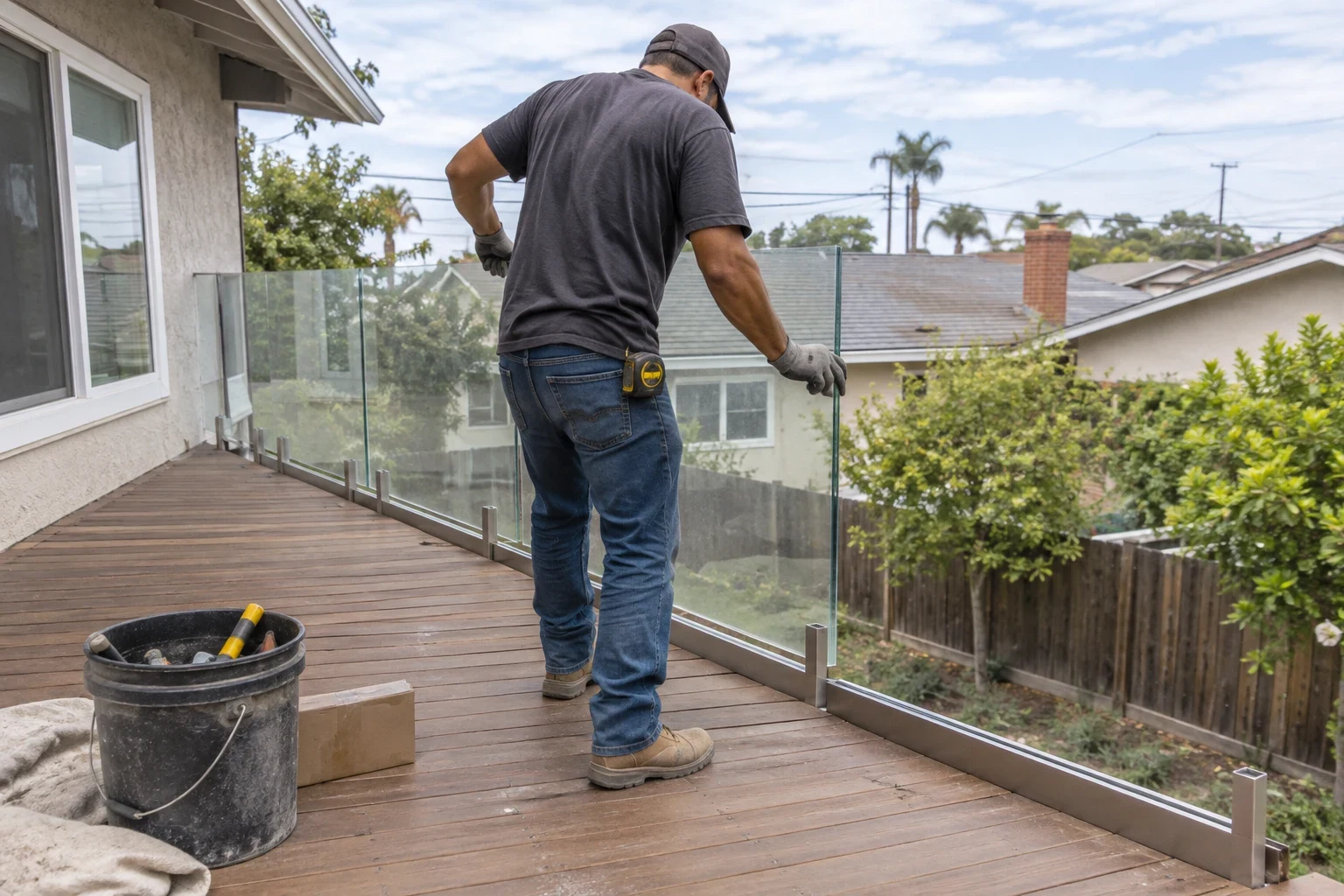
What a Glass Railing Is and When It Makes Sense
A glass railing is a guard made of tempered or laminated glass panels held by a metal base channel, by posts with clamps, or by standoff pins mounted to the edge of the deck. It does the same job as a wood or iron railing, keeping people from falling, but it lets light and the view through.
It is a good choice when an old railing is loose, rusting or rotting at the posts, or when pickets block the view you built the deck for. Near the coast, salt air eats plain steel and paints over wood quickly, so the hardware we use is marine-grade stainless or coated aluminum.
How long a glass railing lasts comes down to details most people never see. That means where the posts land in the framing, how the deck surface is sealed around each anchor, and whether water can drain out of the base channel. Those are the parts of the job we spend the most time on.
What the Work Includes
Structural check of the deck edge
Before we design anything, we look at what the railing will bolt into. A glass guard is only as strong as the rim joist or blocking behind it, so we confirm there is solid wood or concrete at every anchor point.
Precise measuring and glass ordering
Tempered glass cannot be cut or drilled after it is tempered. We measure each run, corner and slope so every panel is made to size, with the gaps the hardware needs.
Corrosion-resistant hardware
Base shoe channels, posts, clamps and standoffs are specified for salt air, such as 316 stainless or powder-coated aluminum. Mixing metals invites galvanic corrosion, so we keep fasteners compatible with the hardware they hold.
Sealed penetrations and drainage
Every bolt that passes through a deck coating or membrane is bedded in sealant so water stays out of the framing. Base channels get weep openings so rain and wash water do not sit against the glass edge.
Top rail or cap where required
Depending on the glass type and design, code may call for a top rail or a laminated panel. We tell you which applies to your layout before you choose a style.
Permit and cleanup
We pull the permit when the project needs one and leave the deck swept, with packaging and old railing hauled away.
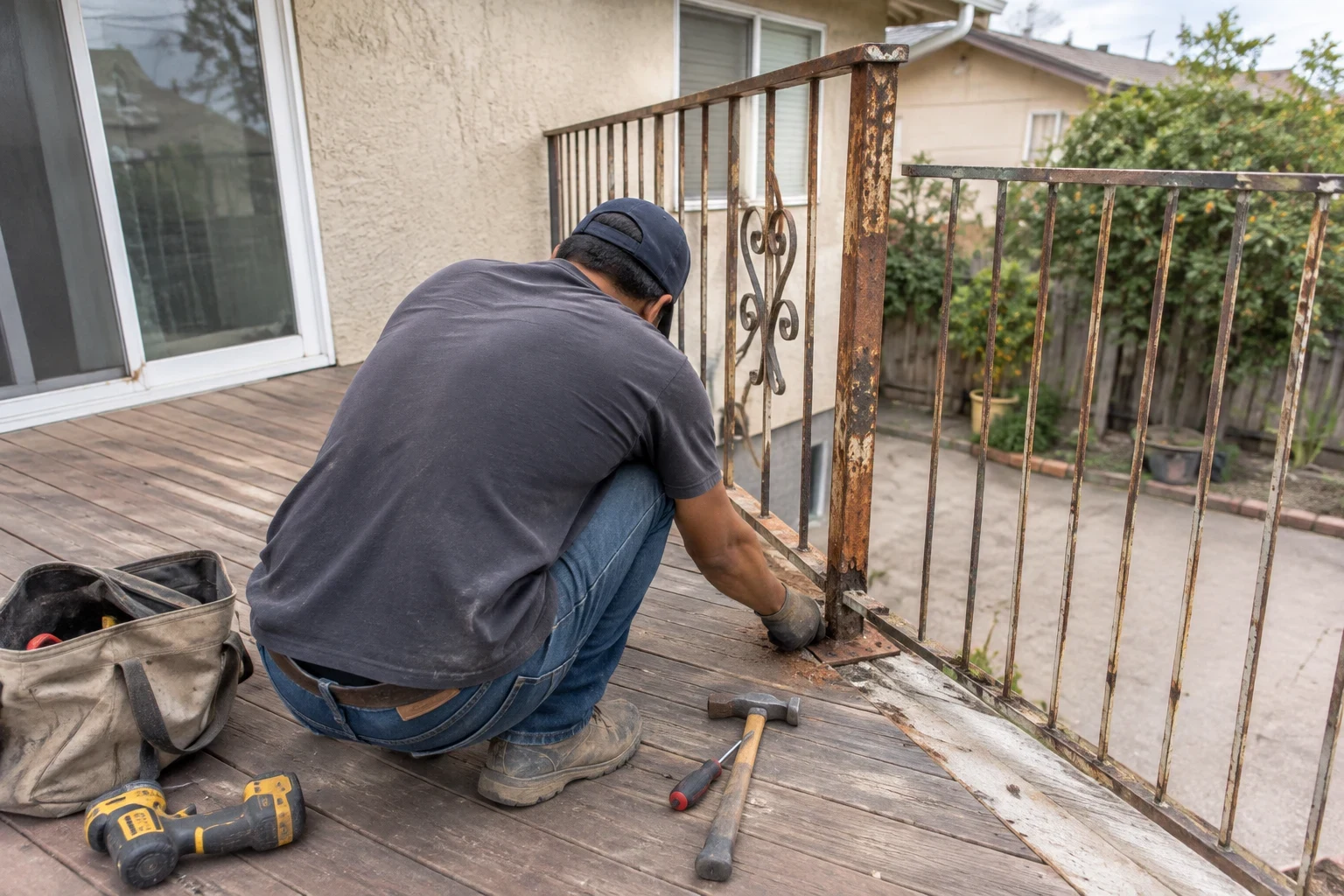
Signs Your Railing Is Due for Replacement
- The railing moves when you lean on it
- Wobble usually means loosened lag bolts or rot at the post base. It rarely gets better on its own.
- Rust streaks or flaking iron
- Rust that bleeds onto stucco or decking means the metal is losing thickness inside. Welds and post bases usually go first.
- Cracked coating around the posts
- When the deck surface splits around a railing post, water is finding its way into the framing below. Catching it early can mean a smaller repair to the deck itself.
- The railing is lower than it should be
- Older railings were often built shorter or with wider gaps than current code allows. That matters most with small children or a resale inspection coming up.
- Pickets block the view
- If you sit on the deck and look through bars, glass gives you the same protection with a clear sightline.
How a Railing Job Runs
- 1
In-home estimate
We come out, measure the runs, check the framing at the deck edge and talk through mounting styles and glass options. You get a written estimate with no sales pressure or obligation.
- 2
Ordering made-to-size glass
Once you approve the design, we confirm final measurements and order the glass and hardware. Panels are tempered to exact sizes, which is why the measuring step is done carefully.
- 3
Removing the old railing and setting hardware
We take out the existing railing, repair or add blocking where the anchors need it, then mount the base channel or posts. Each anchor penetration is sealed as it goes in.
- 4
Setting and leveling the glass
Panels are set on setting blocks, shimmed plumb and locked with wedges or clamps, then capped where the design calls for it. We check that the gaps are even and that the line reads straight from end to end.
- 5
Walkthrough
We go over the finished railing with you, show you how to clean the glass and hardware, and haul off the debris.
What Moves the Price of a Glass Railing
Glass railings are priced by the job, not off a chart, because no two decks are built the same. The biggest swings come from how much railing you need and how it attaches. We explain each line on your estimate so you can see where the money goes.
- Length and number of corners
- More linear feet means more glass and hardware. Corners, ends and stair slopes each need their own cut panels and fittings.
- Mounting system
- A continuous base shoe, individual posts and clamps, and face-mounted standoffs use different amounts of metal and labor. Each also gives a different look.
- Glass type and thickness
- Tempered and laminated glass, thicker panels, and tinted or low-iron glass all change the material cost.
- Condition of the deck edge
- If the framing needs new blocking or the deck coating needs repair around old posts, that work is added before the railing goes on.
- Height, access and permits
- Second-story balconies take more staging and handling than a ground-level patio. A permit, when required, adds its fee and an inspection visit.
Glass Railing Questions
- What happens if a glass panel breaks?
- Tempered glass breaks into small, blunt pieces instead of large shards. Laminated glass has a plastic interlayer that holds the broken pieces in place, which is why it is used where a panel has no top rail behind it. We tell you which type your design needs and why.
- Will salt air ruin the hardware?
- Plain steel and low-grade stainless will stain and pit near the ocean. We use marine-grade stainless or coated aluminum and keep fastener metals compatible, so the hardware holds up. Rinsing it with fresh water a few times a year helps it stay bright.
- Can you install a glass railing on my existing deck?
- Often yes, if the framing at the edge is sound. We check it during the estimate. If it needs added blocking or the deck coating needs repair around old posts, we include that in the estimate so there are no surprises later.
- Do I need a permit for a new railing?
- Many guard replacements on raised decks and balconies require a permit and inspection. We find out what your project needs and pull the permit when one is required.
- What protection do you carry for balcony work?
- We are bonded and insured, with $2 million in coverage. That matters on balcony and second-story jobs, where crews lift heavy glass panels at height over your home and yard.
- How long does installation take?
- Most of the wait is for the glass to be made to size. Installation day itself is usually short for a typical deck, longer for long runs, stairs or second-story work. We give you a schedule with the estimate.
Get a Glass Railing Done Right
We measure, check your framing and walk you through mounting and glass options at your home in Huntington Beach or nearby towns like Seal Beach and Fountain Valley. The estimate is free and comes with no obligation.