ServicesEnergy Efficient Windows
Energy Efficient Windows in Huntington Beach
We install dual-pane windows with Low-E coatings, argon fill and warm-edge spacers, then seal the opening so the glass can do its job. A well-rated unit set in a leaky gap still drafts, so we treat the install as part of the efficiency.
What Makes a Window Energy Efficient
Every window we quote carries an NFRC label with two numbers that matter most. U-factor measures how much heat moves through the whole unit, and lower is better. Solar heat gain coefficient (SHGC) measures how much of the sun's heat passes through the glass. A low SHGC keeps west-facing rooms from cooking in the afternoon, which counts for more here than winter heat loss.
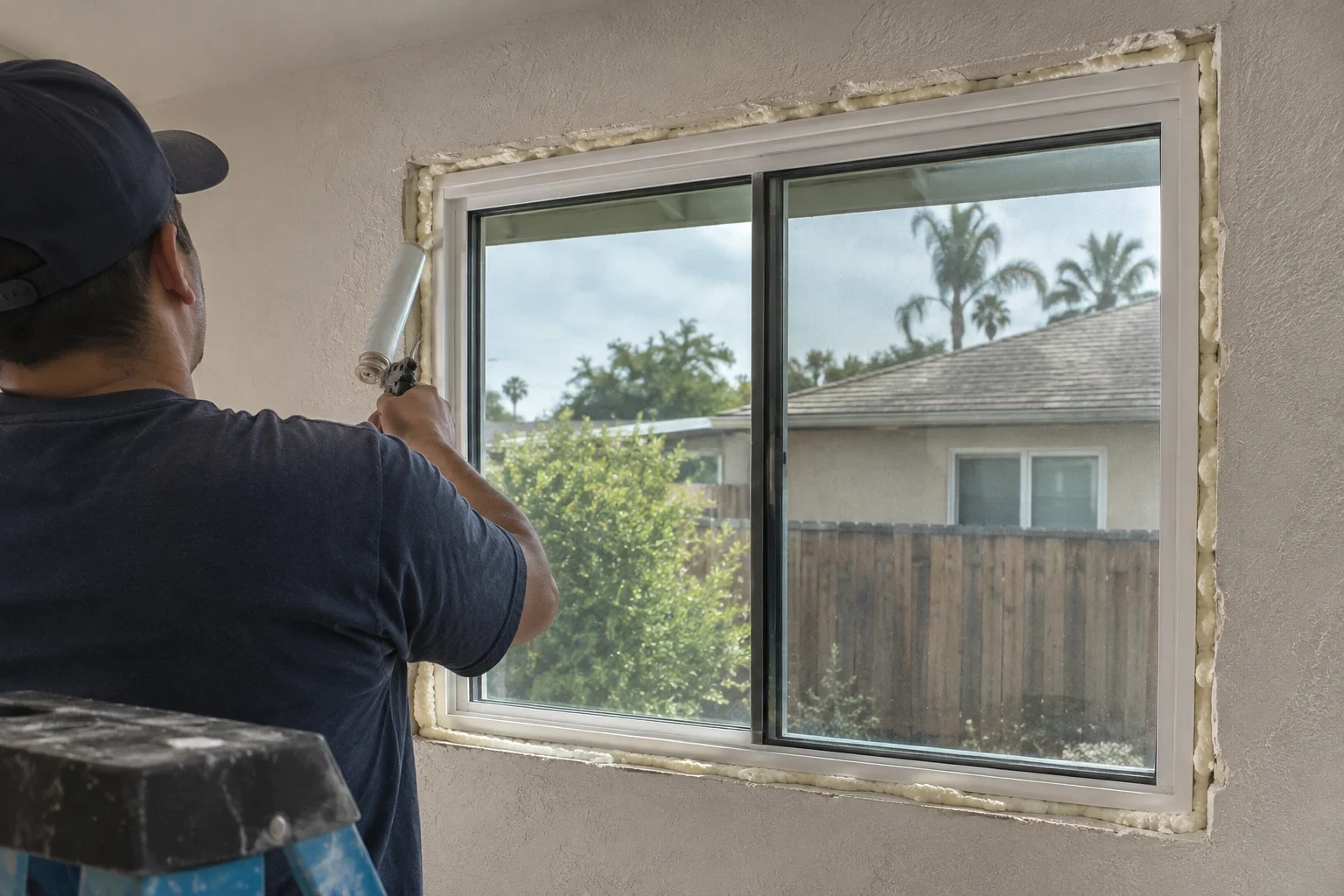
Those numbers come from the factory. Whether you actually get them depends on the install: how the frame is shimmed, how the gap around it is filled, and how the sill sheds water. As an Authorized Crystal Pacific Windows installer, we fit their units to the manufacturer's instructions and spend most of our time on the parts you never see once the trim goes back on.
This is the right call if you still have single-pane glass, aluminum frames that sweat, or dual-pane units whose seals have failed. If your frames are sound, our Window Retrofitting page explains how we can keep the existing frame and swap in efficient glass and sash.
What Goes Into Each Window
- Low-E glass matched to exposure
- Low-E coatings are microscopically thin metal layers that reflect infrared heat while passing visible light. We pick the coating by which way each wall faces, so a sunny west elevation gets a lower SHGC than a shaded north side.
- Argon fill and warm-edge spacers
- The space between panes is filled with argon, a dense gas that slows heat transfer. The panes are separated by a warm-edge spacer instead of solid aluminum, which cuts heat loss at the glass edge and reduces condensation along the bottom of the pane.
- Multi-chamber vinyl frames
- Vinyl frames with internal chambers trap air and conduct far less heat than the old aluminum frames common in older homes. Welded corners keep the frame square and airtight over time.
- A sealed rough opening
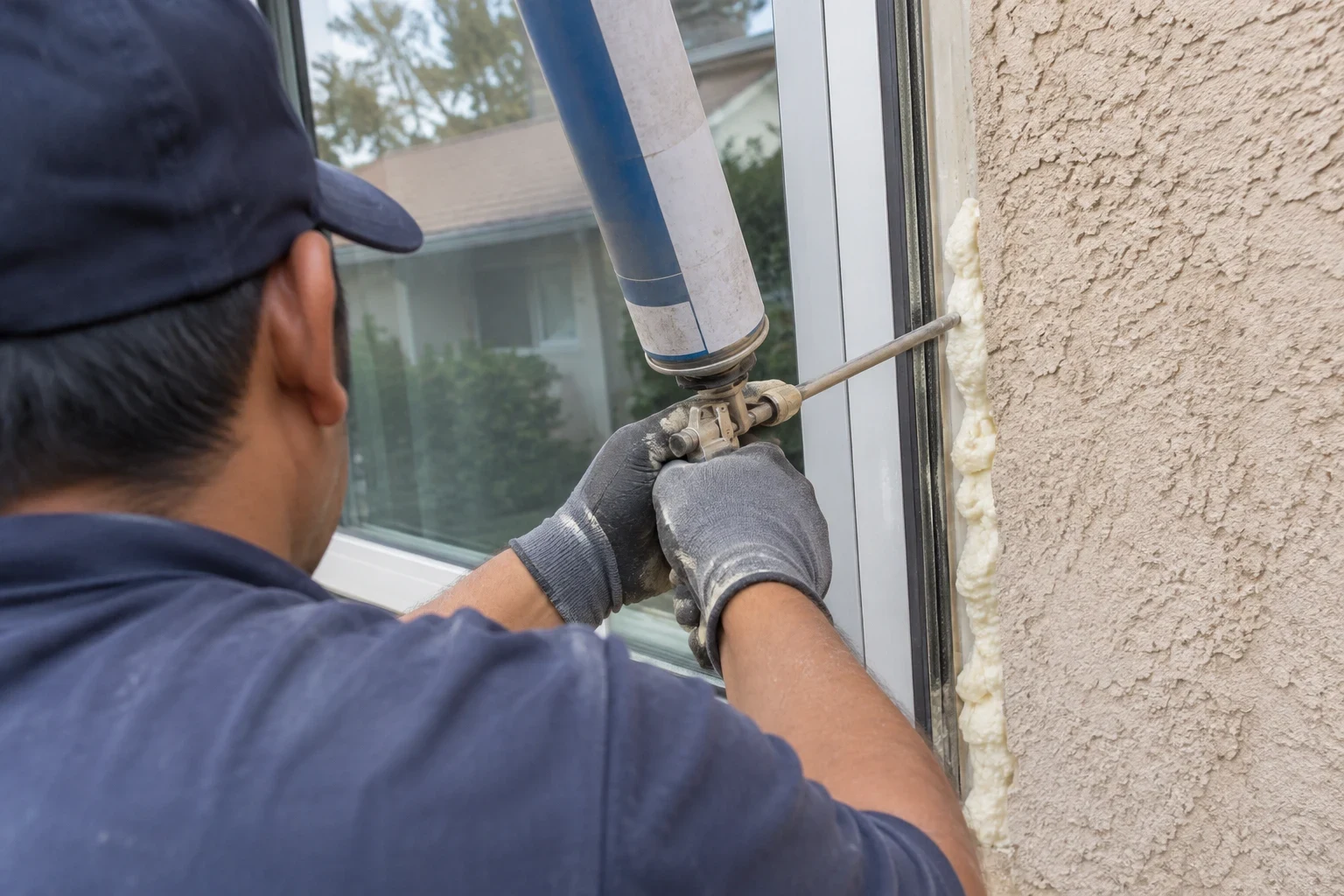
- We fill the gap between the new frame and the wall with low-expansion foam and backer rod, then seal the exterior with a flexible sealant. Standard foam can bow a vinyl frame and bind the sash, so we use the low-pressure kind.
- Code check and cleanup
- We confirm the units meet California's Title 24 energy requirements for replacement windows and handle the permit where one is needed. Old units leave with us, and we vacuum the sills and wipe the glass before we go.
Signs Your Windows Are Costing You Energy
Fog between the panes
Haze or droplets inside a dual-pane unit mean the edge seal has failed. The insulating gas has leaked out and moist air has replaced it, so the glass now performs close to single pane.
Sweating aluminum frames
Aluminum conducts heat fast, so the frame turns cold on cool mornings and collects water. That moisture stains sills and can feed mildew on the drywall below.
Rooms that overheat by late afternoon
If one side of your home runs several degrees warmer once the sun comes around, the glass is letting through too much solar heat. A lower-SHGC coating addresses that directly.
Drafts and whistling
Worn weatherstripping, loose sash and gaps behind the trim all let air through. You may feel it near the sill or see curtains move on a breezy day.
Faded floors and furniture
Clear single-pane glass passes most UV light. Low-E coatings block the large majority of it, which slows fading on wood floors, rugs and fabric.
How an Energy Efficient Window Job Runs
- 1
In-home measurement
We measure each opening, note which way it faces and check the frame and sill for rot or water damage. You get a straight answer on whether retrofit or full-frame replacement makes sense for each window.
- 2
Written estimate
Your estimate lists every window with its size, glass package and install method, so you can see what each line costs. Nothing is added once you sign.
- 3
Install day
We lay drop cloths, remove the old units and clean the opening down to a solid surface. Each new window is set level and plumb on shims, foamed, sealed and checked so the sash opens and locks smoothly. We are bonded and insured, and our policy carries $2 million in coverage for every job.
- 4
Final walkthrough
We operate every window with you, point out the NFRC labels, and remove debris and the old units. The labels stay on until you have seen them.
What Sets the Price of Energy Efficient Windows
Most of the cost comes down to how many windows you replace, the glass package and how much work the openings need. We price each window separately so you can see where the money goes. If a line on the estimate looks higher than you expected, ask us what drives it and we will explain the part or the labor behind it.
- Number and size of windows
- Larger glass needs heavier frames and more material. Ordering several windows at once usually lowers the cost per window compared with replacing one at a time.
- Glass package
- Coating type, gas fill and any upgrades such as laminated glass for sound all change the price. We recommend only what each exposure actually needs.
- Retrofit or full-frame
- A retrofit keeps the existing frame and costs less. Full-frame replacement removes everything to the studs and costs more, but it lets us fix damage and flash the opening properly.
- Condition of the opening
- Rotted sills, damaged stucco or out-of-square framing add labor. We show you what we find before any extra work goes ahead.
- Shapes and permits
- Arched, round or very large picture windows are custom-built and cost more. Permit fees, where required, are listed on the estimate.
Energy Efficient Window Questions
Something not covered here? (714) 868-8790
Is dual-pane enough, or do I need triple-pane?
For a mild coastal climate, a good dual-pane unit with Low-E and argon covers what most homes need. Triple-pane adds weight and cost and pays off mainly in much colder regions. We will tell you if a specific room makes a case for it.
Will Low-E glass make my rooms darker?
Modern Low-E coatings pass most visible light, so the view looks very close to clear glass. Some coatings with a lower SHGC have a faint tint you may notice side by side with old glass. We bring samples so you can judge before you order.
How much will I save on energy bills?
It depends on what you are replacing, how your home is heated and cooled, and which way the windows face. Going from single-pane aluminum to Low-E vinyl makes the biggest difference. We would rather not promise a number we cannot measure in advance.
Do energy efficient windows need a permit?
Replacement windows in California generally have to meet Title 24 energy standards, and many jobs need a building permit. We check the requirement for your address and pull the permit when one is needed.
Do these windows cut street noise too?
Yes, to a degree. Two panes with a gas-filled space block more sound than single glass, and a tight seal around the frame matters as much as the glass. For busy streets, laminated glass on one pane helps further.
See Which Glass Fits Each Room
We will measure your windows, check their exposure and walk you through the options with no sales pressure or obligation. The estimate is written window by window so you know exactly what you are paying for.